Tuesday, March 08, 2011

Kathmandu in the Daylight


As we entered Kathmandu we hit the rush hour wall of traffic and it took a very long time for us to get to a point where we could be dropped off. When we finally did get off there was a swarm of taxi drivers waiting. We quickly got our bags and started walking south with no real idea of where we were, just that Thamel was south of where we were and that it must be somewhat close. Needless to say we had to ask about 5 different people to get where we were going, but we finally arrived at the Kathmandu Guest House. Ariel and Johnny had recommended the place so we thought we could give it a try. When we arrived we were quite impressed with the outside and lobby of the building. The front gate was large and guarded (though we walked right in) and outside the front door was a very nice café and bar. Inside there was marble and dark wood. It seemed promising. I asked about a room and was shown a list of options and prices, about 10 in all. I chose the cheapest room with a television and made sure that the room did indeed have a television as it had been a week or so since I watched and in China the TV shows are terrible so I like watching TV when I am abroad. Content with the knowledge that I would have a TV, and heater, we proceeded to our room. This was around 6pm. The room was nice enough; a bit disappointing for what we paid, but not so much that we were mad about it. I turned on the TV to make sure it worked and then we headed out for dinner.
About an hour later we returned, me with beer in hand, for a quiet evening watching news shows and movies on the television. Some of you may empathize with my disappointment when I realized that the power in Kathmandu had gone out, as it does every 6 hours or so, and neither the TV nor the heater was able to be turned on. I went to the front desk to inquire as to when the power would be back on. After consulting a schedule the desk man, the same who checked me in, told me 1am. Crestfallen I asked when I might expect it to go off again and he informed me sometime around 7am. I was upset that basically the only time the power would be on, and hence I could watch TV, would be when I and any normal person would be sleeping. When I explained that to him he was unmoved. I asked to then change rooms, since I had no use for a room with a TV and heater that would not function. He was unmoved. In fact he said, “You asked for a room with a television, it has a television.” Which didn’t work! He could have easily told me that when I checked in, but failed to do so. I felt cheated.

The next day we got up late, enjoyed a very warm shower and headed back to our original hotel, the Shangri-La, where we had stayed earlier. After staying at the Guest House we figure Shangri-La was reasonably priced for what we got. We checked in and then headed over to Pilgrims Bookstore/café for breakfast. While there I noticed that the bar had a locally brewed traditional beer. I was looking forward to coming back that night to try it, but unfortunately it was out of stock. Afterwards we moved around to a few bookstores, lazed around at the hotel and then went to the Swayambhunath Temple (monkey temple). It has a magnificent stupa crowning the hill. There were quite a few monkeys and I must admit that the temples were beautiful. It was a very unique place despite the hordes of people that were there and the touts. Afterwards we thought we would use the fact that we were away from Thamel to go to Durbar Square. When we arrived we tried to walk into Durbar Square only to be stopped by a guard. He wanted 300 rupees each for us to enter. We decided it was too expensive. In retrospect maybe it wasn’t since that is about 4 US dollars each, but we were pretty sick of being jerked around and decided that rather than pay to go in we would go to the rooftop restaurant nearby and get a good view of the square while having lunch, no charge for entry. It was pretty nice. By this point we thought we were pretty far from Thamel. On the map it seemed awfully far so we flagged down a bicycle taxi to bring us back. As I was flagging down one guy a really scrawny looking guy cut in front of him and swooped over to us. We figured, why not and away we went. Turns out we grossly overpaid because it took our driver about 10 minutes to get back to Thamel and we easily could have walked, but there you have it. We felt so bad for our driver that we gave him an apple and a bag of chips along with our fee and then I took a picture of his feet. I wanted a keepsake of the scrawniest man who carried us in his rickshaw. By this time it was getting a bit late so we decided to have some dinner at a local Italian place and then pack it in for the night in order to enjoy the electricity that on until 9pm.

Our last full day in Kathmandu we woke late and went to find a laundry service. We were at the end of our fresh undies and I hadn’t washed my pants in about 10 days so I was ready to get those cleaned. Unfortunately I only had shorts and long underwear as an alternative so while our clothes were being laundered I wore those around town. After we had gotten our laundry we set off to the National Museum. Since yesterday’s rickshaw ride proved much shorter than we expected we took a glance at the map and decided the museum was close enough to walk to. After about 1 ½ hours we arrived at the museum.
It was interesting to say the least. The grounds and buildings were fairly well dilapidated. We entered the main building of historical items containing mounted animals, coins, panoramas, paintings, and memorabilia. Some items were quite interesting, but the general feeling of the museum was that Nepal did not have enough items to fill a museum and any thing was put in a display case to fill up the building. It was funny, but also sad and really I felt bad for the Nepalese people who certainly had an interesting and rich history, but could not afford to upkeep a museum of national quality. We visited a few more buildings on the grounds and then began our walk back. Eventually we flagged down a taxi and got back into Thamel around evening. We had dinner at a lovely little place that served Nepalese cuisine and went back early to pack and get ready for an early flight the next day.
We got up at the crack of dawn and took a taxi to the airport where we again waited for hours as our flight was delayed due to haze. After a security guard made sure I wasn’t able to stab anyone with my nail clippers by taking it away we were off into the blue skies and back to India. While I was disappointed to be leaving Nepal I was very excited to finally be seeing the Himalayas albeit from an airplane window.

Saturday, February 26, 2011

Chitwan National Park


Arriving at the hotel, Jungle Lodge, was great. We were seated in an outdoor area, given tea and coffee, and given a run down of what the next couple of days would entail. We could clearly see from an adjoining table that there was only one other couple at the hotel. Perfect after our time in India.
We were given a short time to get our bags in our rooms and rest and then we were off for a tour around a traditional village. The tour was very short really as we looked at one traditional house only although our guide was great. He was very relaxed and informative. He said we may have some time to walk by the river for sunset so we followed him. As we headed towards the river we passed an elephant breeding center. We stayed to check out the elephants and feed a few. It was pretty cool, but the smoke of elephant dung hung heavy in the air. All that shit has to go somewhere. We walked on towards the river and the fading light. After walking for a few minutes our guide told us to stop talking and move faster. We crested a small rise by the river and through the reeds could see a rhino drinking from a pool on the other side. It was not but 30 feet away from us, but we felt safe enough since the river separated us. After watching for a few minutes the rhino entered the river, took a quick pee, and then started to come over to our side. Of course we quickly moved away and the rhino kept coming slowly. After a few times playing this game we decided that was enough for the day and headed back towards the village, stopping off on the way at a riverside café to watch the sunset. It was beautiful. We enjoyed a beer with the other couple, Ariel and Johnny, and watched the sun go down into the jungle. After eating dinner at the hotel we were escorted to the Tharu Cultural center. Here we were to watch a traditional dance by the native people, the Tharu. I thought that this would be cheesy, but in fact it was quite good. The dancers had obviously worked really hard and their dances were interesting. So much in fact that the next night we asked if we could go again, but it was a sold out night. After the show we went out for more beers on a rooftop restaurant and then called it a night.

The next morning we were up just after sunrise and jumped into the back of an open jeep to get to the park for an elephant ride through the jungle. There were a few other people with us. The elephant ride was great. We shared an elephant with Ariel and Johnny and away we went. Although the elephant appeared to be going slow, as we looked around the jungle we could tell how fast we were really going. Its amazing how big elephants really are. As I dodged tree trunks and spider webs we went deeper and deeper into the jungle. In the silence of the early morning we saw lots of animals such as monkeys, deer, sleeping boars, and birds. It was great. We spent about 1 ½ hours in the jungle before coming back to the base. We waited for a bit, the rest of our group came back, and we loaded back up. Johnny and Ariel are both ethnic Chinese, but Johnny is English and Ariel is from Hong Kong. I never thought about it before moving to China, but you can certainly tell the difference between Chinese mainlanders and those from other parts, like Hong Kong and Taiwan. As the jeep pulled away one of the kids threw a piece of trash over the side of the jeep (in a national park!) and his parents jabbered away saying nothing to him. I kind of felt like throwing him over the side of the jeep.
After arriving back at our hotel Ariel said something like, you would never believe what they were talking about in the jeep. Apparently the Chinese group had said something to the affect of, “that was so fake, they must drive the animals out into the jungle in the morning so we could see them. Where do you think they keep them? If our nature hike today is the same thing lets not go.” Ungrateful! I couldn’t believe it, but wasn’t surprised. It has been my experience that mainland Chinese have some of the most ridiculous notions of what is real or reasonable. Why in the world would the Nepalese need to fake having a jungle full of wild animals and why would anyone suspect otherwise? Because in China, that’s what people would do. That is why Chinese people think that way.
We headed back to the hotel for lunch and a nap and in the afternoon went down to the river to get into a punt and head down the river. Our guide was very helpful identifying birds along the river, especially the bald headed northern European we saw bathing itself along the banks. Haha. It was a really nice ride down the river and in 45 minutes we were getting out on the banks a few kilometers south, but not before seeing an alligator basking itself on the bank, clearly placed there by park officials. We then took a hike around the grassland and up into the jungle towards the elephant breeding center. We didn’t see too much wildlife along the way, just some monkeys that must have been driven out of their cages for our benefit. We also saw some rhino tracks by a watering hole that were sooo fake. (Did you read my sarcasm?)

The elephant breeding center was cool. There was a small museum with good explanations of the center and an elephant skull which was roughly the size of an...elephant skull. It was big. Outside there were about 20 elephants on the grounds. There were lots of mommas and babies, but no males. When we asked about this our guide explained that wild elephants come by every so often to “have some fun”. Haha. We headed back to the river for sunset and then had a nice meal at our hotel. Because it had been a long day we packed it in early. At 9 the next morning we were on a bus back to Kathmandu sorry to be leaving Chitwan behind.

Thursday, February 17, 2011

Kathmandu


Landing in Kathmandu was an experience. On the flight in I was hoping to look out the windows and see the Himalayas, but there was too much cloud cover. From some of the readings that I did about Nepal I learned that this is a long standing condition and flights are never guaranteed to leave when they are supposed to, just as ours did from Delhi about 4 hours behind schedule.
However, within an hour of leaving Delhi we were breaking through the cloud cover and descending into the Kathmandu Valley. I must admit it was beautiful. Steep mountains and terraced farms surround the outer limits of the city and because of the availability of space the plane descends rapidly adding to the experience. Unlike many other flights I have taken I could not see the airport or the runways until we were almost on the ground. Very exciting.

Planes stop on the tarmac and then buses are sent to fetch passengers. The terminals themselves are very small and the airport in general seemed more fitting of a city of 100,000 rather than 1 million. Again, I imagine this is because of space considerations as the valley is slightly smaller than the country of Singapore. Thankfully we got through customs very quickly. Aya and I had both packed for our trip with bags just small enough to be considered carry on luggage. We never had to check our rucksacks and so never had to risk losing them or having to wait for them upon arriving and of course it was much easier to carry them around than large bulky luggage. Of course this means that what we had in our bags was limited, but we never wanted for anything and to keep our clothes clean we paid for laundry service every 5 days or so. It is one of those things that I have learned in traveling, pack light, move fast.
A man from our hotel and a driver were waiting for us and soon enough we were off into the city. We soon learned that our guide, Ram, was actually the tour operator for the hotel we were staying at and he had learned that we were interested in a trip to Chitwan National Park south west of Kathmandu. We were and within the hour we were checked in and at Ram’s office talking over details of the trip. Unlike a lot of the tour operators we met in India Ram and his associates seemed to run an honest business. We booked for a few days in Chitwan and then planned to return to Kathmandu for a few more to see the sights of the city.
By this time it was late in the afternoon and we decided to walk around a bit, get some dinner, then head back for showers before bed. We had to be up pretty early the next day to get our bus to Chitwan and we assumed the hotel’s solar heated showers would be best in the early evening after a day of charging. They were ok, but because of the night chill in Kathmandu it was still a bit of a dance to shower and get dressed as quickly as possible. We learned that night that Kathmandu has periodic power outages and so the main power would go off at different times of the day throughout all of Kathmandu with private businesses and households running small generators of their own to keep essentials going. Assuming that we would not have anything more than our flashlights and some candles to pack the next morning we made sure to pack before going to sleep.
Early the next morning we left our hotel in darkness and arrived at a nearby bus stop in the neighborhood of Thamel. We put our bags in the back of the bus, I stood outside until the bus was ready to go, and we were off to Chitwan.
The ride itself was long, grueling, beautiful, and scary all at the same time. The seats were not comfortable and for the first hour or so we stopped at places around the city picking up another person or two. Once we finally left the city we entered unto a narrow two lane highway that wound its way around steep precipices almost the entire time. This time around, driving in the left lane further away from the ledge was not as nerve racking, but we could see a few cars and trucks along the way that had tipped off the edge, I can’t imagine what happened to the people inside. Another hour into the trip and we had made our way out of the suburbs of Kathmandu and started following the Trisuli river, which was a beautiful shade of turquoise adding to the already beautiful landscape of the valley with its occasional narrow rope bridge crossing.
After a few stops along the way for food and bathroom breaks the mountains began to recede and we entered into a flat area, the Terai. It is here that Chitwan National Park was located and here that royalty and big game hunters used to come to bag tigers. The tigers are still there, but are no longer hunted. As the bus pulled into a parking lot outside of the town of Sauhara we were met by two gentlemen from our hotel and escorted to it nearby.

Wednesday, February 16, 2011

Through Delhi


Leaving Jaipur in the late afternoon got us to Delhi around 1030pm. We had a flight to Kathmandu at 745 the next morning so we had arranged for a hotel very near to the New Delhi train station where we could sleep for a few hours before getting up to take a taxi to the airport, also arranged.
On the map the hotel appeared to be reasonably close by, less than a kilometer, and just down a street that ran straight away from the station. We decided we would walk. Of course coming out of the station there are hundreds of rickshaw and taxi drivers just waiting for customers and about 20 no thank you’s later we were out on the street. We found what appeared to be the correct street, but there are no street signs on many roads in India, so who could tell?
We walked for a couple hundred meters before deciding that it was too dark and the road did not appear like it did on the map, so we must be heading in the wrong direction. We made our way back to the prepaid taxi stand outside of the station to get a good rate. I shouldn’t fail to mention here that in the 30 minutes or so that we were walking around trying to find the correct road we were approached no less than 8 times by rickshaw drivers asking if we needed a ride somewhere, and every time we swapped 5 or 6 guys were standing around us in a matter of minutes, not comforting. A few times we said yes, and showed them on our map where we were going. None of the drivers knew where it was, but assured us they would get us there for 200 rupees. No thank you.
So we got back to the prepaid taxi stand where drivers were grouped like flies on …something flies really like. Even as we stood in line drivers would be asking us where we were going and quoting a price (still no one could tell us they knew the hotel, but that didn’t stop them). Since it was dark and there was only one street lamp near the taxi stand we would move a few feet away from the drivers surrounding us so that we could see our map. This would work for a minute until all the drivers re-swarmed asking for the 10th time where we were going. It was awful. Finally we got to the front of the line and got a prepaid taxi, 86 rupees thank you, and headed off to our hotel. Apparently it was on the opposite side of the station and if we had exited from the other side we may have walked to our hotel.
When we were dropped off by our driver he just made some faint motions and that was it, our hotel was not actually in sight, but we knew it was close from the map we had. We did find the hotel, but I must point out that the map was not correct (Rough Guide). The Kuldeep Guest house was not where it was supposed to be and there were a few roads which were missing too. So we arrived at the Kuldeep Guest House, now around 1130. We are immediately escorted next door to another hotel; I don’t remember the name, because Kuldeep was apparently full. This is a scam people pull and the second time we had encountered it in Delhi of the 2 nights we had spent in Delhi. It makes me wonder if anyone actually ever sleeps in the hotel they book or if there is a massive shuffle each night. You pay for one hotel; they put you up in the cheaper one next door, but charge you for the full price and keep another full priced room available at their hotel. However, it was 1130 and we were in a very dark neighborhood so the idea of searching for a new place was out. After seeing our room we agreed to spend the night there and started filling out forms. Meanwhile a girl was pounding on her room door and screaming for her roommate to open it. Apparently they had a 430am flight and her roommate had passed out with the door locked and was not responding. By the time we got back up to our own room she was still at it and it was after 12. We had about 5 hours to sleep, but I was really wary of the place we were in and vowed to stay awake. It just seemed shady.

5 hours later I awoke well rested, so much for staying awake, and headed to the front lobby where we met a man who was taking us to our airport taxi. We followed him out into the street and he approached a car where a man was sleeping, then he tapped on the glass and woke him. We threw our bags in the back, I waited for Aya to get in and kept an eye on our bags, and then the guy who brought us there asked for a tip. Aya laughed and said, “You didn’t do anything”. I said no and got in. I wonder if people actually tip him for walking 20ft.
We had a fairly quick ride to the airport, it was 530am, and the driver let us off with no fuss and didn’t ask for a tip, though he might have deserved it for getting up at 530 to drive us. There were only two times on the whole trip when we tipped someone, more on that later. So we arrived at around 6am and entered the airport. The Delhi airport is actually kind of nice, besides the smog you can see in the terminal building. There are plenty of restaurants and shops, free internet, reclined chairs to sleep in, and there is even a service located in the departure gates where you can rent a cube for 7 dollars an hour or less depending on the time of day. These cubes have a single bed, TV, table, a refrigerator and were extremely clean. I thought it might come in handy on the way out of Delhi next time, but that did not turn out to be true. We waited for our flight, which was delayed, then delayed again, finally getting off the ground at 1130.

Saturday, February 12, 2011

Jaipur Tale


Upon arriving in Jaipur we had some time before sunset. We had not arranged with our hotel for a driver to meet us so we waded into the sea of drivers in front of the station and picked a guy that we thought looked trustworthy. Usually we picked old dudes for two reasons. First, they have lost that fire of youth and have much less energy to argue about prices, so it seems. Second, old dudes don’t drive as fast or take as big of risks as the younger guys. So we picked an old dude and went with him. As we got into his rickshaw a young dude approached and they switched places. We briefly considered getting out, but hey, the price was agreed to and this guy said he knew our hotel so we went with it and he actually turned out to be pretty friendly. He asked us where we were from and then said, “you look, see, Indian, Japanese, American, we are like different vegetables, very good for you, vegetable curry” He then asked our names and told us his name was Ari, “aka Handsome Boy” Yes, he actually said that and when I called him “handsome man” he corrected me and said, “boy”. We warmed up to him a bit and when he dropped us off we arranged for him to come back in an hour and pick us up so that we could have some time to eat and take a shower before we tried to take in some sights before dark.

An hour later he was back and he had some grand ideas of going to about three different locations before bringing us back to our hotel, but it was already almost 5 and the sun would go down around 530. Despite telling him many times that we only wanted to go to one place and call it an early night he couldn’t get the idea out of his head that we would go to three places. We also said we wanted to go to a book store to buy a guide book for India, but he refused and told us, “No Lonely Planet book sold in Jaipur, you wait until you are in Delhi” Which struck us as rather odd considering that in Jaisalmer, a town hundreds of kilometers in the desert and with a fraction of the population of Jaipur, there were guide books being sold everywhere. Fishy. In addition every time we arrived somewhere and frequently while on the way to somewhere, our driver would stop the rickshaw, turn around, and give us a story or a warning about where we were. At first I thought, great, information from a local, this might be good. However, it soon became apparent that he was making stuff up, which is probably why he continued to refuse to take us to a book store or admit to the existence of guide books for sale in Jaipur.

First stop was Galwh Bagh, otherwise known as the monkey temple. Yes, there are lots of monkeys there, but also lots of goats. Why not call it the goat temple? I guess it doesn’t have the same ring to it. We ascended the stairs leading up to the temple where we sat watching the sunset and discussing our strange driver. There were a few other tourists straggling about as well. When we had entered the grounds right away three boys ran up to us and said something like, “Monkeys very angry, you need protection?” Of course we said no, little buggers, but it appears some people bought their story. Just a few minutes up the hill we saw a French couple (I know they were French because we had sat near them on the train) being “protected” by a small boy. While their backs were turned he approached a monkey sitting on a ledge and held out his thumb. When the monkey did nothing the boy bit his own finger, then yelled and ran back to the couple saying, “Look, the monkey bit me! I protect you.” The monkeys were everywhere, but they were not aggressive at all except to each other.
After satisfying ourselves that there was no more to be seen we headed back to our driver and insisted on going back to the hotel. Reluctantly he agreed and brought us back. Before we left though we asked again about a book store and got the same reply about no guide books in Jaipur. Weird guy. When we reached the hotel our driver gave us a speech about the next day, would we like a driver for a full day or half day? He could drive us around? So Aya and I had a quick conversation in Japanese about whether it was worth it and did we really want this guy driving us around. We decided he was weird, but harmless and he did actually listen to us even if it took a few times, so we agreed to meet him outside the hotel the next morning.
He was prim and ready, but when we said first we had to change money and then we wanted to go to a bookstore he became upset, I think because he had some grand plan in mind. He brought us to the shadiest looking money changer in the city, but despite that the guy spoke really good English and he and I were having a chat about India and America. Unknown to me Aya was having an argument with our driver in the corner. He continued to insist that there were no guide books and he didn’t know any book stores and she continued to insist there were and that he bring us there (we actually had photocopied some pages of a Lonely Planet guide beforehand and so she was pointing to the exact location of several bookstores on a map of Jaipur while he denied their existence). As we were leaving he appealed to me, I don’t know why, to get Aya to calm down and of course I told him to bring us straight to a bookstore. Finally he relented. Weird.
On the way he stopped at a gas station and gave us his final appeal to not go to the bookstore. He claimed he couldn’t drive in that area of the city because he had forgotten to bring his uniform and if the police saw him without it he would be fined. Now, I am not sure if this was true or not. I saw almost every driver wearing a blue short sleeved shirt, which our driver did have the day before, but claimed was being washed today. None the less, we told him to just drop us close and we would walk. He brought us there anyways and actually walked up to the bookstore with us, which had a full display in the front window with about 20 Lonely Planet guide books in it. We didn’t even buy a book, deciding it would be better to get one in Delhi (hahaha) and he mumbled something about buying it in Delhi on the way back to the rickshaw.
We were then off to the City Palace which had some cool objects, but overall wasn’t very exciting. There were some amazing gates in the complex, which we took pictures of, but most of the other rooms contained textiles and weapons the most of which we had see similar things before. However, there is on premises the two largest silver objects in the world, but they were much smaller than I thought they would be.
After this we crossed the street to the Jantar Mantar, an observatory build in the 1700’s. This complex is a huge outdoor area in which giant observation instrument were built. It was very interesting and the plaques that went with each object were more than adequate in explaining its meaning. It is amazing how much progress humans have made in just a few hundred years. From the grounds we could see the Hawa Mahal. This is a huge 5 story red stone structure that was built so that the royal ladies could view the goings on of the city without being seen. That wouldn’t be very lady like.
When we returned to our driver and told him we wanted to go there he seemed upset and at first tried to say somewhere else, but we insisted because, really it was right there(we said pointing to it) He relented and in 2 minutes we were standing in front of the building. Unfortunately it was closed so we only got to snap a few photos and then we were off again. As we bumped along our driver was explaining to us a market place in which we could see the traditional styles of weaving and some traditional wares. Would we like to go there? Sure, seems like a reasonable thing to do. Of course we were running out of time and this would be our last stop before having to head back to the hotel to gather our bags, but it seemed like it might be worth it. As we got out of the rickshaw we didn’t see any market, but instead a drab concrete building. There was a man waiting for us who showed us inside while our driver went off for prayers (He was Muslim, it was Friday, even though later her tried to get us to see his guru). We accompanied the man down a set of stairs and he showed us where the fabrics were made. I must admit it was interesting. There was a room with 6 or 7 very large pieces of cloth laid out on tables and various workers working on dying them, stamping patterns on them, and stitching on beads. The work was beautiful and obviously took a long time. After viewing the area he brought us upstairs to his shop and here we got wary. We were the only ones in the shop and the owner and his assistant went through a very long process of showing us various clothes and quoting prices all of which were way too high for us. Eventually we expressed interest in one piece and he quoted a price. It was much too high for me to even consider paying. I told him I was sorry, but we had to go. He said name a price, so I did, at half the price he quoted. He told me he would come down a little; I told him that I seriously could not pay more than that. He said he couldn’t do it. I thanked him and starting heading for the door when he angrily said, ok, I could have my price. We then looked at a couple of Punjabi for Aya’s mom and the whole situation started over again with pricing. This time he laughed and told us we should just go if we couldn’t pay that much. What an asshole. We didn’t ask to come to his shop; we told him we had no money. Our driver and this guy were obviously in some kind of cahoots and when our driver came back we insisted on going back to the hotel. When we finally arrived I gave our driver his money, slightly less than what we had agreed on, and he began to argue with us. Aya took most of the conversation; we had agreed she would do so on the drive back to the hotel. While it was infuriating at the same time it was comical. She told him we would not pay full price because he had wasted our time by bringing us to his friends shop, lying about places, not bringing us to a bookshop, arguing with us, etc. He then appealed to me and said something like, “what is she saying, I don’t understand her, I didn’t lie to you, she misunderstood because her English is bad”. I told him he was wrong, and then Aya told him her English was fine, it was his that was bad and we got out.
When we entered the hotel the manager, who had been watching the whole time, said, “That guy, there is always trouble” Which made me wonder, if there is always trouble why don’t you warn people?! But I didn’t say anything; I was too riled up already and just happy to be done with it all. We gathered our bags after a few minutes, headed to the train station, and said goodbye to Jaipur, but unfortunately not goodbye to bad service and scams.

Gates of the Jaipur City Palace


Thursday, February 10, 2011

Jodhpur


After Jaisalmer we took a train to Jodhpur. We left Jaisalmer late in the afternoon and it took a few hours to get to Jodhpur so by the time we arrived it was after dark. Experience will tell you that it’s better to arrive in a new town during the day time. Night can be disorientating. We were supposed to be greeted by someone from the hotel, as Chimmy had done for us in Jaisalmer, but when we got off of the train there was no one there. As we made our way past the rickshaw drivers and said, “No, no thank you” about 20 times one driver asked, “where are you going?”. When we told him the Cosy Guests House he said, “Are you Kevin?” and when I answer yes he immediately called someone and said my name several times. I assume he called our hostel to tell them we arrived, so we found our driver. However, when he pointed to a rickshaw and we got in a different guy jumped in the driver seat and we immediately had to begin negotiations for price all over again. We then zoomed down dark alleys taking hairpin turns at great speed and with no concern for oncoming traffic. More than once we missed head on collision by just seconds. This is very much India.
Finally the driver stopped, pointed to a sign painted on the side of a building that had the name of our hostel and pointed up the road, which was too narrow for his rickshaw. We ambled out, wary as ever of our driver, but what could we do besides trust the dilapidated painted sign and go up the dark narrow alley in this unfamiliar city?
At the hostel we were greeted with what I can only describe as slight surprise and small embarrassment. It appears that the front desk person was not expecting us and had only one room available, not the one we reserved. I wonder who in the world the first driver was talking to if it wasn’t the front desk.
Again, what choice did we have? So we agreed to stay in that room until the next day and so spent the night at the Cosy Guest House. I will admit that it was actually pretty nice and cozy, especially for 6 dollars a night. From the rooftop restaurant we had an awesome view of the fort. As it turned out the next day we only did a couple of things like going to the local bazaar, which we saw a lot of as we circled in about a dozen times trying to find a bookstore that Lonely Planet Recommended, but that no one had heard of and which turned out to be closed for the day. It was interesting seeing the same people over and over again tempting us with the same lines, “bracelet, 10 for 100, now you buy” or “you come in my shop, come see my shop, you come in, come”. In a way it was like riding some sort of infuriating ride like ‘Its a Small World’ where the same characters sing the same thing over and over again until you feel like it really is a small world and maybe you really do want to buy 10 bracelets for 100 rupees and then you snap out of it and realize that you don’t even know 10 people, let alone 10 who would be willing to wear those bracelets.

Later in the afternoon we got going to the fort. Although going to the fort was really the only constructive thing we did it completely made the day.
After winding up hill for about 20 minutes we reached the front gates of the Mehrangarh fort. Built on a high rock outcrop with walls 40 meters high and 6 meters thick it looked very solid. Before entering the gate I got a guided tour headset, the kind you push numbers into as you see numbered displays marked along displays and then you hear an explanation of what the room or object is. Mine was grand; the guide’s voice was that of a man who was clearly Indian, but had an English accent much like I imagine the narrator of the Jungle Story would have. I felt like I was getting a history straight from a colonial subject. He was a man with a neat beard and a turban, a bit on in age, someone who was well educated and whimsical as well as fatherly in his guidance. As you can tell I immediately formulated an image in my mind of what this man looked like and the gestures he used. This pleased me greatly.
As we made our way into the fort we had to pass a number of gates, 7 in all, each becoming smaller and harder to get through than the last. The most interesting I thought was the last, the Loha Pol, which you get to by going up a long ramp which abruptly turns on a right angle just before the gate’s doors which are very heavy with large spikes on them. I thought surely that the spikes were unnecessary, but was quickly corrected by my guide as I punched in number 12. He told me that this was designed to detour elephants from ramming the gate first because it was difficult to get speed if you have to turn at a right angle like that right before the gate and second the long spikes coming from the door which even an elephant won’t do well with. Just by the gate are the red hand prints of widows whose husbands died in battle and who themselves committed suicide by immolating themselves on their husbands’ funeral pyres. Now that is dedication.
Inside are a number of more elaborate palace rooms which are now filled variously with things such as human carriers, elephant carrier baskets, an armory, clothing, and religious artifacts. Some of these were quite interesting and again my headset gave me the grand tour. I learned a lot about the kings who had resided there, the last of whom was still alive and living nearby. I also learned about princesses, wars, decadence, and religious practices. It was all very nice. At the end of my guided tour Aya and I went out onto the rampart and looked at the various cannons and the awesome view of the ‘Blue City’. It is named as such because the locals have painted many of their houses in the color of indigo which was readily available years ago and also works as an insect repellent as well as lending a cool air to the buildings in the heat of Rajasthan. (yes, from the headset)
The tour guide had told me that on the ramparts were the cannons of various countries as when the army had defeated an enemy they took a cannon as a prize of war. One of these cannons was supposedly from China when the local army joined the British in fighting in the Opium Wars. We looked and looked, but never found the cannon. We did see a few other countries, but no indication of a Chinese one.
Unfortunately we only had one full day in Jodhpur and the next day we were on our way early, moving on to Jaipur and a little bit closer to Delhi and a little bit closer to flying to Kathmandu. Most unfortunate of all was that I had to turn in my headset and say goodbye to my guide. I wish his voice would have accompanied me on my entire trip.

Tuesday, February 08, 2011

Jaisalmer


After flying into Delhi on the night of the 21st and staying in one of the worst hotels I have ever been in, we got our train from Delhi to Jaisalmer. This however, was not without trouble as when approaching the New Delhi train station we were approached by what we thought was a rail worker and told a story that almost resulted in us being scammed. More on that later, I intend to do a whole post about the scams we encountered.
After finally finding our train at Old Delhi station we boarded and got ready for the overnight ride. We rode in AC two tier, which basically means the car is cooled and in each berth there are four beds which fold down. It was actually not too bad for sleeping and I was none the worse after 9 hours of overnight travel. As we approached Jaisalmer in the late morning I started to have a headache and to feel a bit like diarrhea was coming on. As we got off the train I knew I was in for something. Luckily we found our hotel manager Chimmy waiting for us at the station and within 20 minutes we were being shown our rooms at the Hotel Suraj. Just after settling in I headed for the bathroom which inaugurated a 12 hour session of losing fluids in all ways possible. Luckily Aya was still feeling ok and with the help of Chimmy was able to locate some medication, water, and soft foods. By late in the evening my stomach was starting to un-cramp and I could keep some fruit and water down, by which time Aya was also feeling ill. It was a terrible night, but by morning light we were both feeling a bit better and managed to get up the strength to go next door for breakfast at sunrise before going back to bed for another 4 hours or so. By noon we were feeling good enough to make a little circuit around the castle, but not much more that day, just a lot of resting and restocking fluids. It is amazing how frail the human body is.
On our final day in Jaisalmer we made it to Gadsisar Lake on the southern edge of town and to some other havelis outside of the fort. Unfortunately we didn't get to take the overnight camel ride into the desert that we were hoping for, but we were really glad to be back on our feet and had a good laugh about the quality time we spent together.

Jaisalmer's Hotel Suraj


I'm sure this sounds a bit like a brochure, but I really wanted to describe this hotel because I found it so interesting.
This is a bit of the view of the Hotel Suraj, where we stayed in Jaisalmer. The hotel itself is in a very old Haveli(stone carved house)that has been owned by the same family for generations. To get to the hotel you have to enter the fort, past ramparts and gates, and then weave your way among narrow lanes, filled with merchants and the errant cow, to get to the hotel. On the first floor the owner's family lives. In the center of the building is an open courtyard that goes to the sky and lets in light during the day. To the south side of the building is a stairwell that leads to the roof on the 5th floor if I remember. We had a room on the 3rd floor which had open windows to the courtyard and to the west.
Going into the room are a pair of ancient, heavy wooden doors that can only be locked by chain at the foot of the door. The room has the air of a cave, but not too dark or dank, open and refreshingly cool in the heat of Jaisalmer. In the ceiling are a number of hooks that have been drilled into the rock, obviously long ago. These were used for oil lanterns to light the room. Colorful paintings adorned the walls. Being located in the fort itself made for a very convenient way to see Jaisalmer's main attraction. The family who owns the place is also friendly and the manager, Chimmy, was very helpful in getting us anything we needed, which turned out very well.

Monday, February 07, 2011

20/30


Entering into my thirtieth year (note, I turned 29 years old on January 30th so I have 29 behind me, hence entering the 30th) I also entered into my 20th country outside the U.S., Nepal.No longer a teen. More on that later.
As I think back on the travels I have done and the cultures that I have seen I am happy with the choice I have made to forgo the alternatives. Travel can take up time and resources that could have been used for something else which of course then the question comes to mind, 'what could I have done with this time/money?'. This is especially true when you have a trip that was not entirely enjoyable. Even in these times there are lessons to be learned. I believe that learning those lessons are very valuable. I think given the alternative my time and money is well spent. I intend to continue my travels, which you will see here, and to continue exploring the world. I hope you all will stay here with me and enjoy the ride. Cheers.

Sunday, January 09, 2011

Throw Away Society


Last week in teaching economics I used a new article from the Washington Post about Amazon as an example of a company or individual patenting a new technology. If you didn’t hear about it, Amazon has come up with a way to return gifts you receive before you even receive them. If you are feeling cheated already, wait until you hear more.

With this new technology you can set up various filters which will essentially guarantee that you get gifts you want and don’t get gifts you don’t. For example; your mother sends you a CD for Kenny G for Christmas, via Amazon. You hate Kenny G, so months ago you set up your account to say, “any gift involving Kenny G convert to gift card” and BAM! You get a gift card instead of the Kenny G CD. Now the tricky part, does mom find out? Well, you have the option, you can send a card saying, “thanks for the Kenny G” or you can say, “Thanks for the Kenny G, but I converted it to a gift card, I don’t like Kenny G.” You can also set your account to convert all gifts from mom, no matter what. Or you could set it up to interact with a wish list so no matter what the gift or from whom you convert it.
The reason a retailer like Amazon would do this is to cut production costs. Every time someone doesn’t get the gift they want a package comes back to the warehouse and has to be repackaged and restocked, not to mention the initial un-stocking and shipping that was wasted to begin with. Amazon is cutting costs, raising profits. When 28 billion in goods was sold this holiday season and 30% of those returned I can hear the Amazon share holders clinking glasses now.

The reason I found out about this new technology was because of a discussion that was happening in my office near my desk. Where I work 4 teachers share a large room and so we chat often exchanging ideas. I got involved in a conversation about what a big waste Christmas gifts are. The idea that pretty much all of us were agreeing to was that Christmas has gotten too commercial. The massive amount of goods that people buy and the carelessness with which they do it is, well, not good.

Now some of you may remember 4 years ago when I wrote a post here called “Gift of the Magi” You may find it here

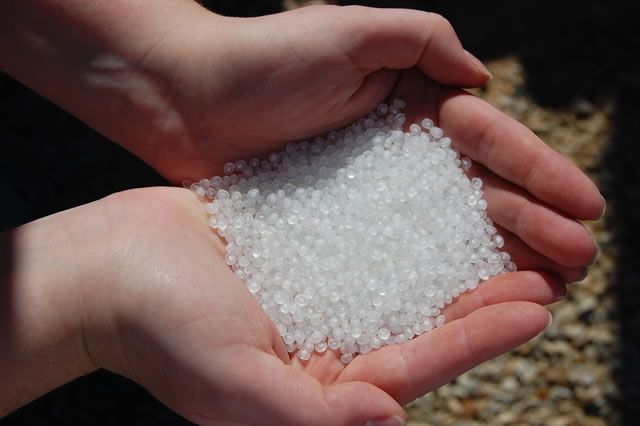
Mainly I lamented the waste of Americans and suggested that Christmas was about something deeper than gifts. I stand by that. I also said a few things about the amount of trash that Americans are expected to generate during their lifetimes. Combining waste on the consumer and well as producer end it would be about 1,000 tons of garbage. A very small percentage of that gets recycled, but a lot of it just goes to a landfill. In landfills many things can break down, or decompose. Unfortunately not everything can decompose. Most plastics do not decompose. Ever. They can get smaller and smaller, but they never break down. This is a problem considering the proliferation of plastics and the ever growing human population.

3 years ago I read a book called ‘The World Without Us’. While the first half was terribly interesting and detailed how everything we have built up as humans would just fall apart if we were to disappear, the second half of the book was almost exclusively about plastic. It was at this time that I first learned about the Great Pacific Garbage Patch.
The patch is an area in the Pacific Ocean, floating thousands of miles from civilization, somewhere between the size of Texas and the continental United States. It is hard to say because no one can draw a distinct boundary around plastics floating in the oceans. The best you can do is to measure concentrations of plastic in the water. Estimates by the UN are that in the garbage patch there are 40,000 pieces of plastic per square mile. The Patch is characterized by exceptionally high concentrations of plastics, chemical sludge, and other debris that have been trapped by the currents of the North Pacific Gyre, one of five such gyres in the world. The North Pacific Gyre works in the way a toilet would, swirling slowly and concentrating matter in the center. Because of this, much garbage in the ocean will find its way into the center of the gyre, though it may take years. During that time much of the plastic is broken into smaller bits and sinks below the surface, but is still in the water. Note though breaking into smaller bits doesn’t mean that it turns into its base elements. That will never happen. It is just that the plastic becomes smaller pieces of plastic.
Essentially people may think, this garbage patch is floating in the ocean, very far from land. That is gross, but it isn’t actually harming us and even if it were, it is a patch and we could just clean it up. Like most problems in the world people think that if it’s not in front of them they don’t care enough to do anything about it.

The problem actually is right in front of us. Plastic comes back to us in many ways. Animals living in the oceans, fish most obviously but also other organisms, eat those pieces of plastic because they resemble food. In some parts of the gyre concentrations of plastic are 10 times the amount of biomass. When creatures seek small organisms like plankton for food they are really getting a lot of plastic. While eating plastic is bad enough these pieces of plastic are extra toxic. Due to the nature of plastics they are a magnet for toxic materials and as this plastic floats through the ocean it accumulates toxins from the water around it. By the time an animal eats the plastic it can have up to a million times the toxicity of the water surrounding it. When you plug that into the equation you may want to think twice about eating marine life. As the plastic works its way up the food chain the toxicity becomes greater and greater, just like large fish like tuna and marlin are known to have high levels of mercury the larger a fish gets the higher the concentration of other things as well. The next time tuna or other ocean fish land on your plate remember that you are just another step up the food chain, accumulating what your food has accumulated.
So of course, we should clean it up, but the reality is that we can’t. The project is too huge. No government, let alone even a combination of governments, would be willing to spend the resources projected to clean up the ocean.
There is no easy solution to the garbage patch. What will likely happen is that human consumption of plastic will continue, the patch will grow, and marine life will increasingly suffer, meaning we will too. The best thing that we can do is to use our power as consumers of plastic to change the types of plastic we consume and the level at which we consume them. Before buying that Halloween mask you will use once, before taking that plastic bag at the grocery store, before buying a product from the shelf that has lots of unnecessary packaging, before choosing which kind of bottled drinks think for just a second about how you can make a better choice.
It has been more than a year now since I became vegetarian and I don’t regret it at all. In fact it has been one of the best decisions I have ever made, one that I am most proud of. Sure, I do occasionally think it would be nice to have a burger or maybe some cured ham, but now I know what my consumption habits result in and I can’t justify eating meat anymore. Faced with that choice, denial or changing my lifestyle, I changed my lifestyle. I saw something wrong with the world and instead of ignoring it because it seemingly wasn’t right in front of me; I took the time to understand it better and to take responsibility for my actions. I plan to do the same thing this year with plastic. Sure, it will be impossible to get away from plastic. It is everywhere. However, I can greatly reduce the amount and type that I use. Reducing the amount can be done in easy ways like bringing my own re-usable grocery bag to the store. Aya and I have done this for about 2 years now and it is working great. I estimate we use about 300 less plastic bags every year, but really that is a drop in the ocean, we can do much better.
Changing the type of plastic I use may be much harder, but I have some leads on how to do so. There are more than a handful of companies now that are investing in non-petroleum base, biodegradable plastics. Earth Soul and Plantic are two examples of companies making plastic from biodegradable materials and Sony has developed a plastic that it now uses in its product, which is biodegradable. In the United States Cargill has developed a plastic made from chicken feathers. Two birds with one stone there, taking a waste product and making into a new product.
It will take time and much more research to figure out exactly in what ways I can change my habits. We are all in different situations and one person’s abilities are not the same as another’s but we can all take a few minutes to consider the world around us. Now that you have read this you too can be faced with a decision, denial or change of lifestyle?

http://www.earthsoulindia.com/
http://www.sciencedaily.com/releases/2005/03/050325184643.htm
http://www.plantic.com.au/docs/Plantic_Media_Release_Sainsbury.pdf
http://www.sony.net/SonyInfo/technology/technology/theme/vegetableplastic_01.html


Saturday, December 04, 2010

And 59 To Go


Just over a month ago Aya arrived in Shanghai. I brought a photo with just to make sure it was her (pictured). As usual I was surprised by how small she is. More than that I was so accustomed to a silent house that having my little chatter box back has changed my world here. She has changed my world in many other ways too. It has been a year now since we were married in Hawaii and in some regards that seems like only yesterday. To celebrate one year together we took a trip to Hangzhou. It’s a scenic town not far from Shanghai. I expected a smaller town with nice scenery since it had been hyped up that way by people I had talked to and the research I had done. There were supposed to be some nice hiking and running trails surrounding that a scenic lake. I was very much looking forward to that as Shanghai is a busy place with lots of people, thick air, and few places that are quiet and people free.
We departed Shanghai on a bullet train which zipped through the country side at 350kmph. The train ride was nice enough, but as I looked out the window I kept thinking, “Ok, we are getting further into the country side, when are we going to get to a place where the smog parts and the blue sky shows itself?” I kept reassuring myself that Hangzhou and blue skies were just around the corner. I was sorely disappointed.

Hangzhou has some nice scenery, but like every other place I have been to in China it was packed with people and very polluted. As we arrived at the train station and hailed a taxi it was obvious that this place was not a smaller city. Sky scrapers could be seen nearby through a haze of smog. The train station was brimming with people coming and going from Hangzhou. I was immediately crestfallen as I realized this was not going to be a weekend where I got away from the city atmosphere.

Indeed, there were mountains and scenic pagodas. There were nice views and old structures. There were hiking trails and running trails that wound through nice patches of mountain side and scenic lakeside landscaping. It had all the potential for a nice place to be for a weekend. At one point after climbing a pagoda we spent some quiet time in a tea garden, the tea was really good, and for a moment we escaped the city. We walked about a lot and saw some sights, but the first feeling of being in a smoggy crowded place was prevalent. We made the best of it and enjoyed our time just being together and relaxing. At one point we had wandered down a side street and the strangest feeling fell over us. It took us a few minutes to realize what it was; we weren’t surrounded by people, traffic, smog, and noise. It felt great.

Since then I have had none of that silence, back here in Shanghai. There has been no silence outside and none inside either. Aya has been waiting for me when I come home each day as we continue our lives here. I enjoy my job immensely and she says she enjoys her life here too learning Chinese and tending house. There are certainly things that we don’t like, but it seems that we have found enough things we do like to keep us here a bit longer. I think part of that is just having each other. Three months without her was too much and I could tell that my stress level was higher before she was here. While I still value my private time I am growing more and more appreciative of having a partner to share my life with, someone to unburden my concerns to, share a laugh with, to be perfectly honest, to share in my triumphs and my defeats no matter how mundane. Our futures are now tied together and each step we take is together.
Recently one of my dear friends passed away. I have followed some of his widow’s thoughts as she tries to make sense of such a sudden change of her life and the impact it has had is one that is obvious. Once you have committed your life to one person and built towards the future together, what happens when one day they disappear? I try to never think about it, yet think of it all the time. I wonder what Aya would do if I suddenly died. While it pains me to picture her as a widow it pains me even more to know that I won’t be there anymore. In my own selfish way I think the worst part of my death won’t be that I can no longer experience the world, but that I will no longer have the company of my wife. On our trip I remarked to Aya that we had, “One year down...” To which she replied, “…and 59 to go". I hope that is true.
.